 GiftCoves
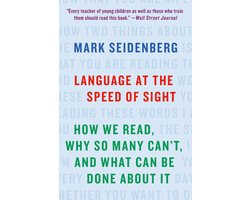
Language at the Speed of Sight How We Read, Why So Many Can't, and What Can Be Done About It
bij 1 winkel
Verwant
Streepjescode: 9781541617155

Alle aanbiedingen
- bol.comLanguage at the Speed of Sight How We Read, Why So Many Can't, and What Can Be Done About ItNaar de winkel€ 14,85Op voorraad
We verdienen mogelijk commissie als je via deze link koopt. Wat jij betaalt verandert niet.
Over dit product
"Every teacher of young children as well as those who train them should read this book." -- Wall Street Journal According to a leading cognitive scientist, we've been teaching reading wrong. The latest science reveals how we can do it right. In 2011, when an international survey reported that students in Shanghai dramatically outperformed American students in reading, math, and science, President Obama declared it a "Sputnik moment": a wake-up call about the dismal state of American education. Little has changed, however, since then: over half of our children still read at a basic level and few become highly proficient. Many American children and adults are not functionally literate, with serious consequences. Poor readers are more likely to drop out of the educational system and as adults are unable to fully participate in the workforce, adequately manage their own health care, or advance their children's education. In Language at the Speed of Sight, internationally renowned cognitive scientist Mark Seidenberg reveals the underexplored science of reading, which spans cognitive science, neurobiology, and linguistics. As Seidenberg shows, the disconnect between science and education is a major factor in America's chronic underachievement. How we teach reading places many children at risk of failure, discriminates against poorer kids, and discourages even those who could have become more successful readers. Children aren't taught basic print skills because educators cling to the disproved theory that good readers guess the words in texts, a strategy that encourages skimming instead of close reading. Interventions for children with reading disabilities are delayed because parents are mistakenly told their kids will catch up if they work harder. Learning to read is more…
Omschrijving aangeleverd door bol.com.