 GiftCoves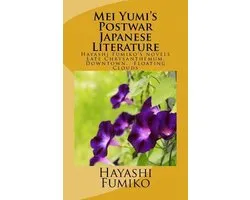
Mei Yumi's Postwar Japanese Literature
bij 1 winkel
Verwant
Streepjescode: 9781517080990

Alle aanbiedingen
- bol.comMei Yumi's Postwar Japanese LiteratureNaar de winkel€ 15,00Op voorraad
We verdienen mogelijk commissie als je via deze link koopt. Wat jij betaalt verandert niet.
Over dit product
The postwar Japanese strived, unsteadily as if about to fall, to live everyday lives and to restore Japan, while suffering from the survivor's guilt.The early postwar novels of Hayashi Fumiko.Three novels of Hayashi Fumiko translated here are related to the early postwar period in Japan. Late Chrysanthemum - Ban'Giku''Late Chrysanthemum'' is an ex-geisha's one night story after the war. The main character Kin had a strong will to survive. An ex-geisha had a visitor, who was her ex-lover sometime in the prewar years and desperately needed money. He intrigued to get money from his ex., even by slaughter. How did the ex-geisha rid out of the crisis? Her quick wit worked, which suggests us how to manage a risk in a daily life.In November 1948, 23 Showa, ''Late Chrysanthemum'' appeared in an extra issue of a literary magazine, the Bungei'Shunju. This is the most important work of Hayashi Fumiko, which is praised for its highly qualified perfection and elaborate description. Downtown - Shita'machi''Downtown'' is a two week story of a female peddler and an ex-soldier after the war. Their relationship finished all of sudden. ''Downtown'' appeared in April 1949, 24 Showa in an extra issue of a literary magazine, Shosetsu'Shincho. The literary magazine has been published monthly since September 1947 from The Shinchosha Publishing Co, Ltd. which was founded in 1896. Floating clouds - Uki'gumo''Floating Clouds'' is mainly a five year story. The storyline, however, extends from 1939 in Japan, during the years since 1943 in French Indochina, and the postwar period in 1945 to 1949 in Japan. The author describes changes in peoples feelings after the war, while following the trajectories of men and women before and after the war. This novel can be seen as Hayashi Fumikos…
Omschrijving aangeleverd door bol.com.