 GiftCoves
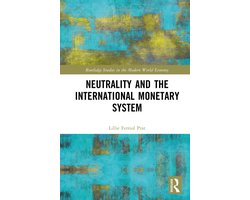
Routledge Studies in the Modern World Economy- Neutrality and the International Monetary System
dans 1 boutique
À voir aussi
Code-barres: 9781041426301

Toutes les offres
- bol.comRoutledge Studies in the Modern World Economy- Neutrality and the International Monetary SystemVoir la boutique199,00 €En stock
Nous pouvons percevoir une commission si vous achetez via ce lien. Le prix que vous payez ne change pas.
À propos de ce produit
The book advances a clear methodological claim: neutrality cannot be assessed at the level of institutional form or procedural rules but must be understood as an ontological condition of the monetary system itself. It provides a systematic examination of contemporary shifts associated with BRICS expansion and de-dollarisation initiatives. Neutrality and the International Monetary System develops a new research programme for understanding neutrality, asymmetry, and institutional design in the twenty-first century. Bridging Critical Realism and International Political Economy, it introduces a reformulated Ontological Realism through Ontological Containment Theory, a unified analytical architecture for examining how asymmetries emerge, stabilise, reproduce themselves, and may be better contained within monetary and governance systems. The book reconceptualises neutrality and demonstrates that contemporary monetary tensions within both BRICS and the United States can be understood as differentiated responses to a shared structural condition. Rather than treating these developments as evidence of competing civilisational projects, the analysis explores how they may contribute to the conditions under which greater system-level neutrality becomes possible. The book investigates how structural asymmetry has historically developed, culminating in fiat monetary mechanics, and redefines the “Deep State” as the long-term institutional reproduction of Monetary Ontological Asymmetry, Institutional Egoism, Sovereign Misalignment and Epistemic Closure. The book concludes that concentration need not necessarily produce domination. By rendering the architecture of asymmetry visible, OCT demonstrates how concentration can function procedurally as a mechanism of coordination, benefitting…
Description fournie par bol.com.