 GiftCoves
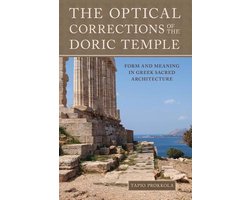
The Optical Corrections of the Doric Temple
dans 1 boutique
À voir aussi
Code-barres: 9781503298132

Toutes les offres
- bol.comThe Optical Corrections of the Doric TempleVoir la boutique18,00 €En stock
Nous pouvons percevoir une commission si vous achetez via ce lien. Le prix que vous payez ne change pas.
À propos de ce produit
The optical corrections of the Doric temple were first mentioned by the Roman architect and writer Vitruvius. According to him they were meant to prevent optical distortions that otherwise would make the temple look faulty. This explanation has ever since been repeated by most scholars although some of them maintain that the corrections were actually implemented to bring vitality to the otherwise too static appearance of the temple. Yet, it is obvious that these” distortions” didn’t bother later architects either during the Roman age or the Renaissance. The author is both an architect and a historian of ideas. This book represents an entirely new theory about the meaning of the corrections. Prokkola claims that the corrections were simply tools used by the architects designing these temples to make the temple a unity although it was composed of many (Doric columns), in a word, a unity in plurality. He shows that the task of creating a unity out of a row of these round, fluted, and tapering columns with entasis would be difficult enough for any architect of any time.The ideal of unity in plurality based on the heroic outlook inherited from the heroic past became the most fundamental ideal for the Dorian Greeks living in city-states along with the development of the polis. All the most important spheres of life were organized according to this ideal; the polis itself, its military organization, the hoplite phalanx, and – finally – the Doric temple that was the ultimate symbol of the city-state. This ideal as such is well known in the history of ideas, but it is usually connected to Neo-Platonism and early Christianity; seldom to the archaic and classical Greeks. However, the analysis of some texts of the Platonic philosophers presented in this book shows clearly that…
Description fournie par bol.com.