 GiftCoves
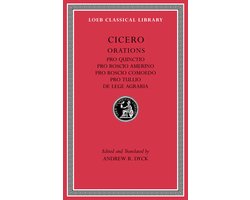
Loeb Classical Library- Pro Quinctio. Pro Roscio Amerino. Pro Roscio Comoedo. Pro Tullio. De Lege Agraria
dans 1 boutique
À voir aussi
Code-barres: 9780674997677

Toutes les offres
- bol.comLoeb Classical Library- Pro Quinctio. Pro Roscio Amerino. Pro Roscio Comoedo. Pro Tullio. De Lege AgrariaVoir la boutique28,94 €En stock
Nous pouvons percevoir une commission si vous achetez via ce lien. Le prix que vous payez ne change pas.
À propos de ce produit
The early speeches. Cicero (Marcus Tullius, 106–43 BC), Roman lawyer, orator, politician, and philosopher, of whom we know more than of any other Roman, lived through the stirring era that saw the rise, dictatorship, and death of Julius Caesar in a tottering republic. In his political speeches especially and in his correspondence we see the excitement, tension, and intrigue of politics and the part he played in the turmoil of the time. Of about 106 known speeches, fifty-eight survive intact or in large part; together with his rhetorical treatises, they have long served as models for orators, advocates, and others. This volume contains four speeches from Cicero’s pre-consular, and one from his consular period. Pro Quinctio, his earliest surviving defense (81), handles a complex commercial dispute deftly and in loftier style than usual in such cases. Pro Roscio Amerino, his first criminal case (80), is a successful defense on a politically fraught charge of parricide. Pro Roscio Comoedo (72 or 71) defends a famous actor and old friend involved in a financial dispute, with suitably theatrical flair. Pro Tullio (71), a dispute between neighbors about a deadly slave attack, casts light on social conditions in the Italian countryside in the aftermath of Spartacus’ revolt. De Lege Agraria (63) successfully forces the withdrawal of a proposal for the distribution of agricultural land to the urban plebs. This edition replaces the original by John Henry Freese (1930). The texts have been freshly edited and translated, with full introductions and ample notation.
Description fournie par bol.com.